Guide to Coleraine
Seen as the informal capital of the Causeway Coast on the northern coast of Northern Ireland, Coleraine has great historical significance and provides all the modern amenities you may need.
Coleraine is situated on the island of Ireland, renowned for its scenic landscapes and rich historical heritage, making it a unique part of the island’s diverse regions.
According to the 2011 Census, the population of Coleraine was 24,634.
Coleraine is usually bustling during the day but becomes quieter at night. The towns of Portrush and Portstewart are nearby and collectively form an area called “The Triangle”, known for its nightlife.
The town is busy all year round and is thriving as it is a favourite destination of many International and National visitors who visit the Causeway Coast. Coleraine is also very close to many of the world’s most impressive pristine beaches, natural attractions, and coastal views.
In the 1960s a Coleraine was chosen as the location for a new university campus, as part of what has become the new Ulster University, the first outside of greater Belfast. This brought and continues to bring many students to the area each winter to the causeway coast and glens areas. They mostly stay in Portstewart or on the University Campus, as such a railway station was built opposite the east entrance.
The local football club plays a significant role in the community, fostering support and organizing activities that bring residents together.
What Does The Name “Coleraine” Mean?
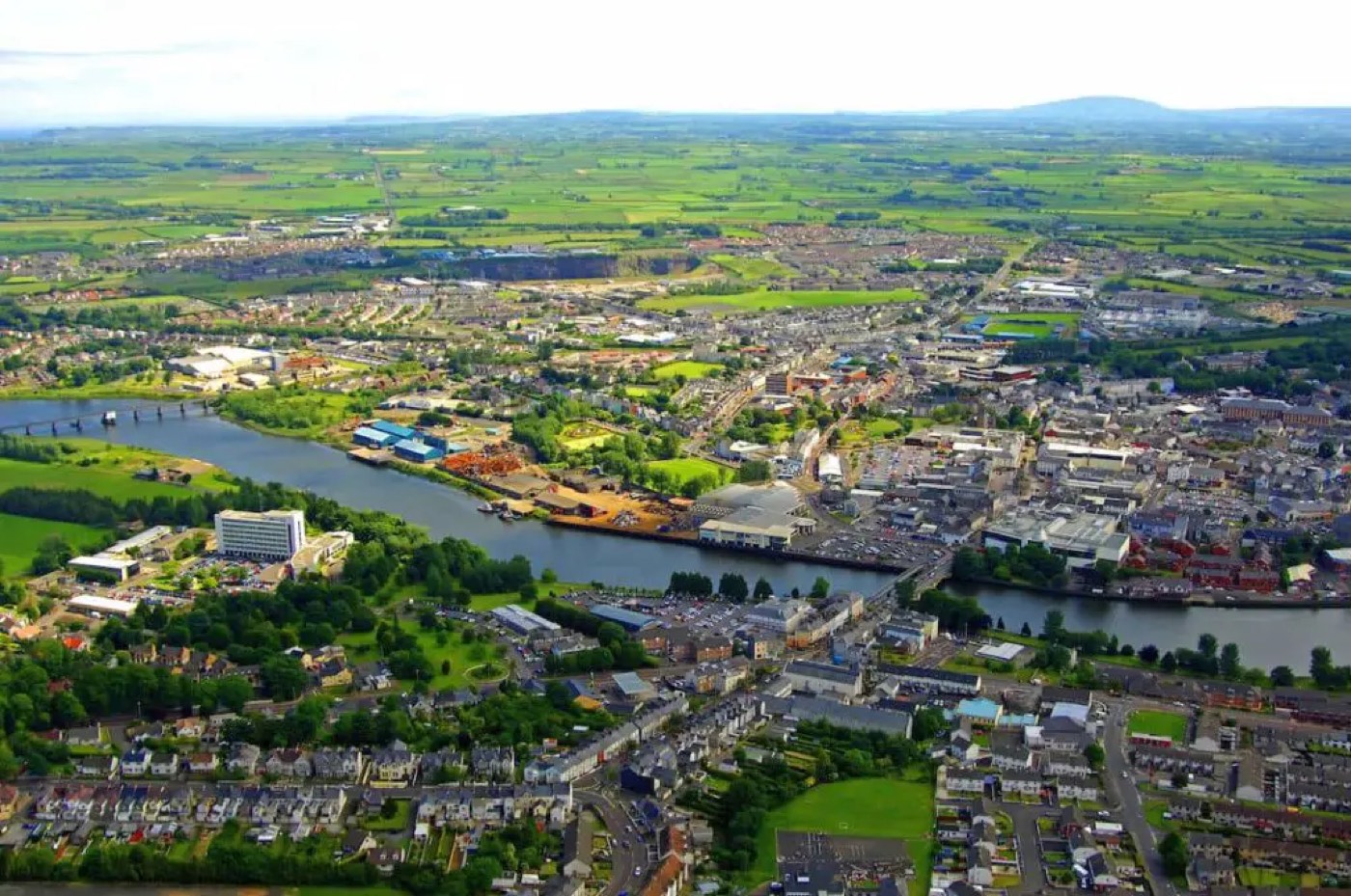
Cúil Raithin or Coleraine means “Nook of Ferns” and St Patrick gave the town its name. It is home to 25,000 inhabitants and the peaceful town lies on the longest river in Northern Ireland, the River Bann.
Coleraine Town Centre – The Diamond Centre
Coleraine Diamond
The official town centre is known as ‘The Diamond Centre’ and this area is usually bustling with people. The impressive sandstone Town Hall was built in 1859. Also known as ‘Tidy Town,’ Coleraine has won several awards and there are numerous of places to sit and watch the world go by among the dazzling floral displays.
Shopping in Coleraine
Coleraine Specialty Market, The Diamond
Shopping in Coleraine is pleasurable and safe due to the town centre only being open to pedestrians. Several high street chain stores have shops in Coleraine and this is supplemented by many cafes, independent local businesses, pubs, and restaurants. The locals love the two independent department stores, Dixons and Moores, as these provide great all round shopping for everyone. They each have a restaurant and have been part of the local scenery for many years.
Culture and Leisure
Coleraine Showgrounds home to Coleraine FC – IMage By archieah17
There are many opportunities for both outdoor and indoor leisure pursuits. There is a leisure centre in town that is open 7 days per week and offers a gym, pools, sports hall, café, and health suite.
In Coleraine, you can indulge in many forms of outdoor activities, including swimming, soccer, gliding, cycling, fishing, water sports, archery, sky diving, rugby, climbing, snorkelling, tennis, clay pigeon shooting, athletics, surfing, diving, bowling, putting, golf, boating, orienteering, and pony trekking.
A choice of three main local parks may be visited, and each offers something different for visitors. There are also many coastal, inland, parkland, and forest walking trails around Coleraine. Additionally, the coleraine find highlights various educational opportunities, guiding potential students to discover courses and programs offered in the area.
The influence of Ulster Scots culture and heritage is evident in Coleraine, shaping local traditions and enriching the historical trails that highlight the town’s unique identity.
The Arts and Entertainment
The North Coast’s Premier Entertainment Centre, Jet Centre is a hugely popular local attraction. It is situated over the new bridge, on the road west to Londonderry and just off the roundabout. This indoor complex offers entertainment for children and adults alike. The centre features ten-pin bowling, multiple cinemas, a pool hall, a diner, and an amusement arcade.
Jet Centre is also home to ‘Alley Cats,’ a massive indoor climbing play park with nets, ropes, balls, and slides, offering endless thrill possibilities for children. You will also be able to enjoy a cuppa and relax whilst being right next to the action.
One of Northern Ireland’s oldest professional theatres, Coleraine’s Riverside Theatre, is well-loved and known. It offers world-class entertainment as well as Outreach, an excellent youth drama programme.
The theatre is operated jointly by the Borough Council and the University of Ulster, and several excellent, well-known actors have at some stage performed there. These include one such local hero, James Nesbitt. In 1978 he gave an exceptional performance in Oliver as Fagin, and his international career continues to go from strength to strength.
Coleraine Tempestuous History
Coleraine and the surrounding area have significant historical value as it is the first known settlement of humans in Ireland in about 5935 BC. At the start of the 17th century, it also became the first town in the ‘Plantation of Ulster’. As you explore the area, you will find plenty of evidence of this uncommon heritage.
Coleraine’s pre-plantation history is turbulent. At the time, Ireland was divided into kingdoms which were each governed by a Chieftain. Due to the clashes of Coleraine’s clans, the town was settled many times over the years.
In 1607, King James 1 colonised Ulster after the Flight of the Earls in what was known as ‘The Plantation of Ulster.’ The Honourable Irish Society’ was then formed to fund the building of a new fortified town. They were enticed by promises of timber and salmon fishing.
Coleraine is located in Northern Ireland, which is part of the United Kingdom, in contrast to the Republic of Ireland, an independent state. This distinction reflects the region’s unique historical and political context.
Coleraine Potted History
Mountsandel is a Mesolithic site that is dated from about 5935 BC and it contains some of the earliest evidence of human settlement in Ireland. Saint Patrick named the town after he was offered a piece of ground covered by ferns to build a church. A potted history of Coleraine can be found by visiting Coleraine Potted History
The Troubles
Firefighters Putting out the Flames of the 1973 Bomb
During the Troubles, 13 people were killed in Coleraine, County Londonderry, Northern Ireland, ten of whom died as a result of two car bomb explosions with contrasting contexts.
On June 12th 1973, the Provisional Irish Republican Army (IRA) detonated a car bomb on Railway Road without providing an adequate warning. As a result, six Protestant civilians in their 60s and 70s were tragically slain. The second most deadly incident happened two years later, on October 2nd 1975; all four fatalities, in this case, were members of the loyalists.
Two civilians without links to paramilitaries were among the three people shot and murdered in Coleraine. Danny Cassidy, a Sinn Féin electoral worker, was identified as one of them. At the same time, the other two were believed to be targeted by the Ulster Freedom Fighters and the UVF.
Coleraine Today
Coleraine is nowadays an affluent large town that is accessed easily by bus, train, and car. As the town utilises a one-way system everywhere, the traffic moves smoothly and there are ample parking opportunities.
Coleraine has abundant walking trails, both in the town itself and in the surrounding parks, beaches, forests, rivers, and rocks. The world-class cycling tracks include the National Cycle Network, which opened in May 2001 and crosses the Millennium Bridge.
As the Atlantic Ocean and the River Bann are easily accessible, many types of water recreational pursuits are possible. Coleraine is a big town and is ready for City Status. It is also near Portstewart, Portrush, Castlerock, Bushmills, Ballycastle, and Portballintrae and within a few minutes drive to Carrick-a-Rede Rope Bridge, Giant’s Causeway, the Mussenden Temple, and Dunluce Castle.
Tourism
Coleraine, located close to the Causeway Coastal route, that attracted more than two million visitors annually.
Castlerock, a small village located northwest of Coleraine, is home to a beach which continues from the one found at Portstewart, separated by the mouth of the River Bann.
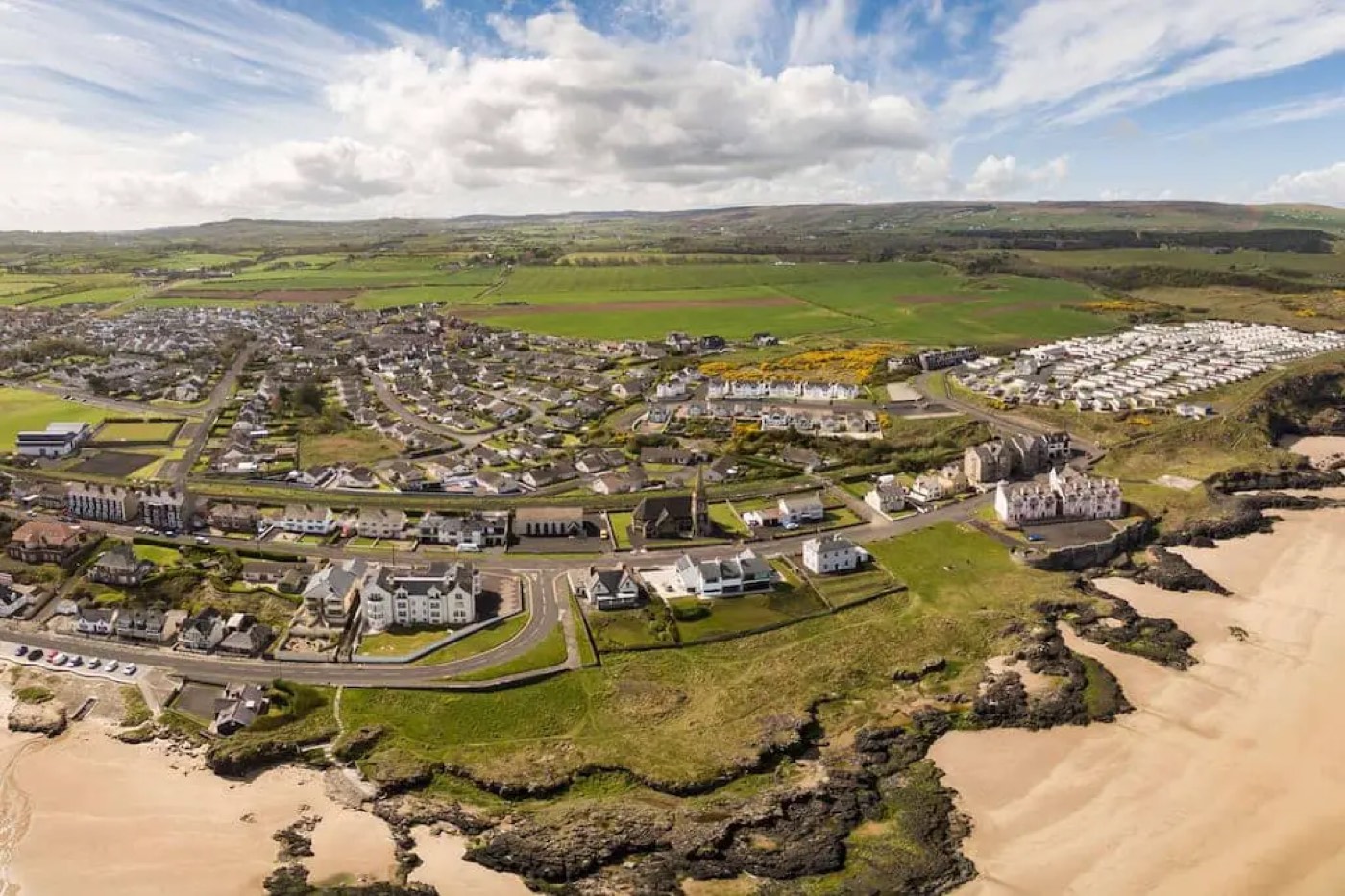
Portrush and Portstewart are just a few miles north of the town and are the main tourist attractions in the area. With a number of spectacular, Blue Flag, beaches, promenades and of course the famous Barrys (now Currys) amusements.
Mussenden Temple is also not far away. Frederick Augustus Hervey constructed the latter in the 18th century and has views of County Donegal and Scotland. Downhill House, the residence of Hervey and managed by the National Trust, suffered disrepair after WWII.
Giant’s Causeway, a UNESCO World Heritage Site and must-visit natural wonder, is located in the region. The area is renowned for the Giant’s Causeway’s unique basalt columns and its significance as one of Northern Ireland’s most iconic attractions.
Carrick -a rede – The Ropebridge is only a few miles away on the Antrim Coast road and is a spectacular site to see.
Dunluce Castle – Th ruins of this Irish castle are know far and wide through its setting in many movies, tv programs and even music videos.
The North West 200
The Causeway Coast plays host to one of the fastest road races, in the world, the ‘North West 200′ every May. The public roads between Portstewart, Portrush, and Coleraine get turned into high-speed (up to 200 miles per hour) tracks, and it is one of the last of its kind in Europe.
The race is unbelievably thrilling to watch, and standing next to the roads presents the best views of the powerful bikes speeding by. The event makes for a busy time at the Causeway Coast, as an additional 150,000 people come to watch Ireland’s biggest outdoor sporting event every year.
Places of interest
The east side of the town is characterized by Mountsandel Forest, containing the ancient site of Mount Sandel fort. This has been identified as the oldest site of human settlement in Ireland, containing wooden houses dating back to 7000 BC. The fort can be reached through the Mountsandel forest near Coleraine Courthouse or another located two miles south of Mountsandel near the village of Loughan.
There is a Town tour, funded as part of the 400 year celebrations of the town by causeway coast and glens district council, with all of the historical buildings that can be found here
Mountsandel Fort
The remains of Mountsandel Fort can be found in the middle of the magnificent Mountsandel Forest. Now declared a State Care Historic Monument, the Fort dates back to 7000BC and the early Iron and Mesolithic Ages. It is located at the edge of a steep river bluff that drops into the River Bann on the side of the river opposite to the town.
Mountsandel Wood
Mountsandel Fort can be reached via a 2-mile walking trail. As the trial is circular, either the upper or lower or path can be taken along the banks of the River Bann and through the forest.
Coleraine has been frequented in the past by Neolithic and Mesolithic man, Saints, Vikings, Norsemen, Chieftains, Barons, Earls, heroes and Rebels. Man has known for thousands of years that Coleraine is a stunning place to live!
Phoenix Peace Fountain
Coleraine Rose Garden and Pheonix Peace Fountain
In Anderson Park the Phoenix Peace Fountain can be found for public enjoyment. Originally a gift from the USA, each symbol on Phoenix Peace Fountain has a specific meaning. To be able to read the full dedication on its six base platforms, you’ll have to walk completely around the fountain. The world famous Giant’s Causeway ancient rocks’ hexagonal shapes can be recognized easily.
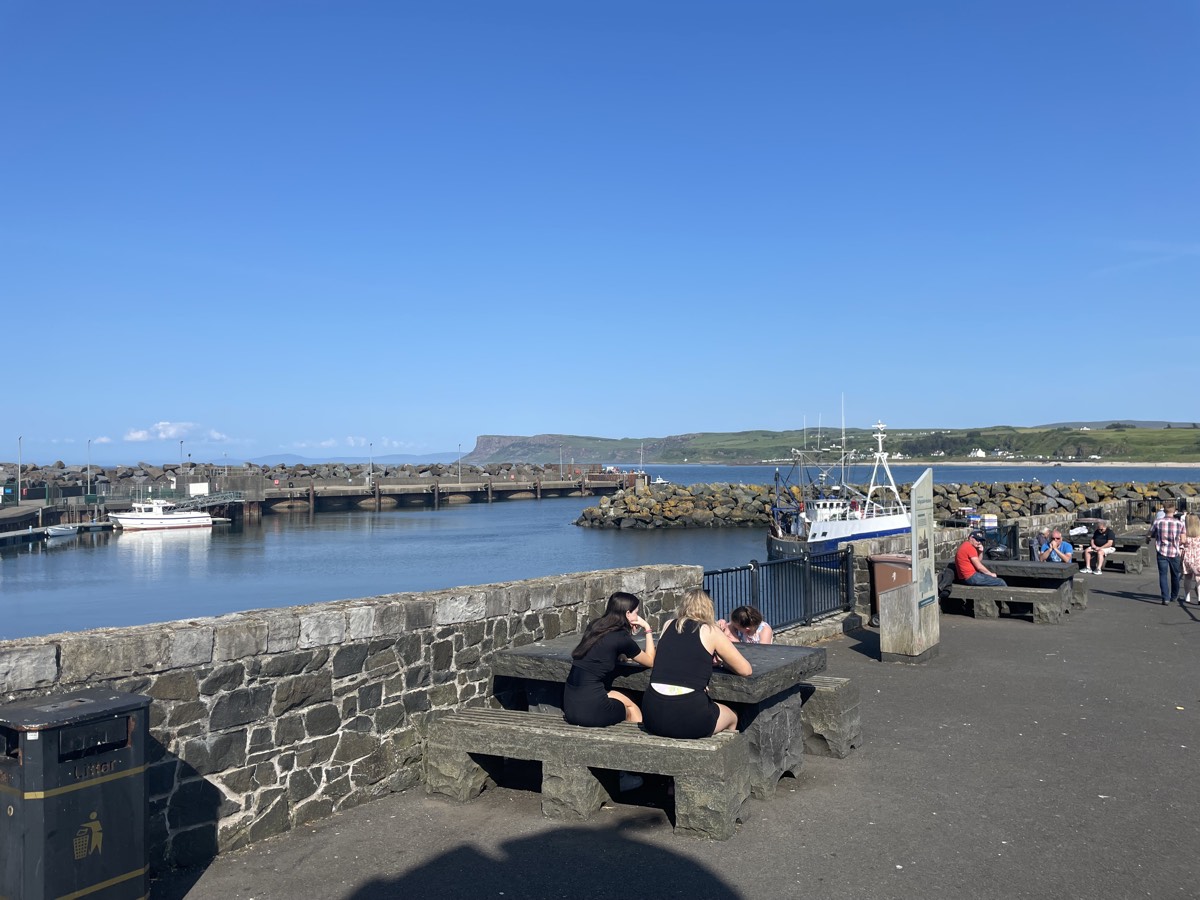
The modern commercial harbour and Marina are a mile from town, in the direction of Portstewart and slightly off the main road. They offer excellent facilities that include powered moorings for sailing of all kinds, fishing, water skiing, and canoeing. Seven championship golf courses are also within a few miles of Coleraine.
Outdoor Activities
Coleraine is a paradise for outdoor enthusiasts, thanks to its prime location on the Causeway Coast in Northern Ireland. The town centre is surrounded by beautiful surroundings, with the River Bann winding its way through the heart of the town. This scenic river is perfect for sailing, fishing, and a variety of water sports, making it a favourite spot for both locals and visitors. Anderson Park, located just a short walk from the town centre, offers a peaceful retreat with its lush gardens, the striking Phoenix Peace Fountain, and plenty of space for picnics or leisurely strolls.
For those who love to explore on foot, the Coleraine Riverwalk is a must-do, guiding walkers along the riverbanks and through the historic centre of town. If you’re seeking adventure, the nearby Downhill Demesne and Mussenden Temple provide breathtaking views of the rugged coastline and rolling countryside. Just a few miles from Coleraine, the world-famous Giant’s Causeway invites visitors to marvel at its unique basalt columns and dramatic seascapes. Whether you’re into hiking, cycling, or simply soaking up the natural beauty, Coleraine’s location on the Causeway Coast offers endless opportunities to get outdoors and explore.
Food and Drink
Coleraine’s food and drink scene is a true reflection of Northern Ireland’s rich culinary heritage. In the town centre, you’ll find a tempting array of restaurants, cafes, and traditional pubs serving up everything from hearty Ulster fry breakfasts to classic Irish stews and the freshest local seafood. Many of the town’s eateries pride themselves on using local produce, ensuring visitors get a real taste of the region.
For those with a sweet tooth, Coleraine’s bakeries and delicatessens are a delight, offering homemade breads, pastries, and regional specialties. The town is also just a short drive from the famous Bushmills Distillery, where visitors can enjoy whiskey tastings and guided tours. Throughout the year, the Coleraine Food Festival brings the community together to celebrate local flavours, with live music, cooking demonstrations, and plenty of opportunities to sample the best food and drink the area has to offer. Whether you’re grabbing a quick bite in the town centre or enjoying a leisurely meal with friends, Coleraine’s vibrant food scene is sure to impress.
Community and Events
Coleraine is a lively and welcoming town, known for its strong sense of community and a packed calendar of events. The town centre regularly comes alive with festivals and celebrations, such as the Coleraine Summer Festival, which features live music, street performers, and family-friendly activities. Film lovers flock to the Coleraine International Film Festival, showcasing a diverse range of local and international cinema.
The town’s cultural heart beats at venues like the Riverside Theatre, where visitors can enjoy everything from drama and comedy to music and dance. History buffs will love exploring the ancient Mountsandel Fort, one of Ireland’s oldest human settlement sites, or delving into the town’s past at the Coleraine Museum. Community groups and organizations play a big role in local life, welcoming both visitors and new residents to join in events and activities. Whether you’re attending a theatre performance, exploring a historic fort, or mingling with locals at a festival, Coleraine’s community spirit is always on display.
Accommodation
Coleraine offers a wide range of accommodation options to suit every visitor, whether you’re looking for luxury, comfort, or a budget-friendly stay. The town centre is home to several well-appointed hotels, such as the popular Lodge Hotel, which provides modern amenities and a warm welcome. For those who prefer a more independent stay, there are plenty of self-catering apartments and cottages available, offering flexibility and a home-from-home experience.
Guesthouses and B&Bs throughout the town provide cosy, affordable accommodation with a personal touch, perfect for visitors who want to experience local hospitality. The nearby Ulster University campus also offers convenient accommodation options, including student residences and holiday apartments, especially during the summer months. No matter your preference or budget, you’ll find the perfect place to stay while exploring Coleraine and the wider Causeway Coast.
Getting There
Getting to Coleraine is straightforward, with excellent transport links connecting the town to the rest of Northern Ireland and beyond. The railway station, conveniently located in the town centre, offers regular train services to Belfast, Derry, and other key destinations, making travel by rail both easy and scenic. The town’s bus station, also centrally located, provides frequent services to local towns, Belfast, and even further afield, ensuring visitors can reach Coleraine from anywhere in Ireland.
For those travelling by car, Coleraine is just off the A26, with ample parking available in and around the town centre. Belfast International Airport is approximately 30 miles away, offering connections to major UK and European cities. Cyclists will appreciate the network of cycling trails and bike rental options, making it easy to explore the beautiful surroundings at your own pace. Whether you arrive by train, bus, car, or bike, Coleraine’s accessible location makes it the perfect base for discovering the Causeway Coast and the north of Ireland.
Governance
Coleraine was the headquarters of the Coleraine Borough Council until 2015 when it was merged into the Causeway Coast and Glens District Council. The latter is currently based in the former Coleraine Borough Council headquarters.
The East Londonderry constituency for Westminster Parliamentary and Northern Ireland Assembly elections comprises the Causeway Coast and Glens Borough Council area and the adjacent County Londonderry, even though parts of this constituency are located in County Antrim.
In 2014, the residents elected 3 councillors from the Democratic Unionist Party, 2 from the Ulster Unionist Party, 1 from the Progressive Unionist Party, 1 from the Northern Ireland Conservatives and 1 from the Social Democratic and Labour Party.
Climate
Coleraine’s climate is maritime, featuring cool summers and mild winters. The nearest Met Office weather station used to be at Ulster University Coleraine, but no records are available anymore. The nearest observing station is Magilligan, roughly 5 km away or the Giants Causeway roughly 9 km away. Rainfall typically peaks over 100 mm in October, while May has the lowest average of under 60 mm.