
Is Ireland part of the UK? The answer is both yes and no. The island of Ireland is divided into two political entities: the Republic of Ireland and Northern Ireland.
This means there are two countries on one island, making Ireland unique as two separate states coexist on one island.
The Republic of Ireland is an independent country, while Northern Ireland is part of the United Kingdom. In this article, we’ll delve into the historical context, political distinctions, and common misconceptions surrounding the division of Ireland.
Introduction to the British Isles
The British Isles is a term used to describe a group of islands off the northwest coast of Europe, including Great Britain, Ireland, and thousands of smaller islands such as the Channel Islands and the Isle of Man. Bordered by the Atlantic Ocean to the west and the North Sea to the east, this region is known for its diverse landscapes, from rugged coastlines to rolling hills. Within the British Isles, there are two separate countries: the United Kingdom of Great Britain and Northern Ireland, and the Republic of Ireland. The United Kingdom is a sovereign state made up of England, Scotland, Wales, and Northern Ireland, while the Republic of Ireland is an independent country occupying most of the island of Ireland. Although these countries share historical and cultural ties, they are governed separately, with their own governments, laws, and international identities. Understanding the distinction between the British Isles, the United Kingdom, and the Republic of Ireland is key to appreciating the complex relationships and histories that shape this part of the world.
Key Takeaways
- Ireland is divided into two political entities: the Republic of Ireland, a sovereign state, and Northern Ireland, which is part of the UK.
- Northern Ireland is made up of six counties, often referred to as the ‘six counties’, which are located within the province of Ulster and have historical and administrative significance.
- The historical context of Ireland’s division includes the Act of Union 1800 and the Irish War of Independence, leading to distinct political and social identities in both regions.
- Brexit has significantly impacted trade relations and border issues between the Republic of Ireland and Northern Ireland, raising concerns about economic and political stability in the region.
Understanding Ireland’s Division
Ireland is divided into two distinct political entities: the Republic of Ireland and Northern Ireland. The Republic of Ireland operates as a sovereign state, independent from the United Kingdom, while Northern Ireland remains part of the UK. This division is not merely geographical but deeply rooted in historical, political, and cultural contexts.
Understanding this division requires examining each entity independently. The Republic of Ireland and Northern Ireland have unique identities, governance structures, and historical backgrounds that have shaped their current statuses.
We will explore the specifics of these two regions, beginning with the Republic of Ireland. The Republic of Ireland is sometimes referred to as ‘Southern Ireland’, especially in historical or colloquial contexts.
The Republic of Ireland
The Republic of Ireland is an independent sovereign nation, distinct from the United Kingdom. Established as the Irish Free State on December 6, 1922, it transitioned to a republic in 1949, marking its full independence from British rule. The emergence of independent Ireland during this period signified the achievement of full sovereignty and the establishment of a fully autonomous state. This sovereign state operates under a parliamentary democracy with its government based in Dublin, the vibrant capital city.
The Republic of Ireland’s journey to independence was marked by significant historical events, including the Irish War of Independence, which played a crucial role in shaping its self-governance. Today, it stands as a testament to the resilience and determination of its people, maintaining a strong national identity within the broader context of the European Union.
Northern Ireland
Northern Ireland is included in the United Kingdom. The other countries in the UK are England, Scotland, and Wales. The full name of the United Kingdom is The United Kingdom of Great Britain and Northern Ireland, which highlights the inclusion of Northern Ireland within this political union. Belfast, the capital of Northern Ireland, serves as a hub of political activity and cultural significance.
The UK government retains overarching authority over Northern Ireland, including the power to impose direct rule and allocate constitutional powers within the UK’s political structure.
Northern Ireland’s political status has been a focal point of contention and negotiation, particularly in the context of its relationship with both the Republic of Ireland and Great Britain. Grasping Northern Ireland’s role within the UK helps in understanding the broader geopolitical dynamics.
Historical Context: How Did Ireland Split?
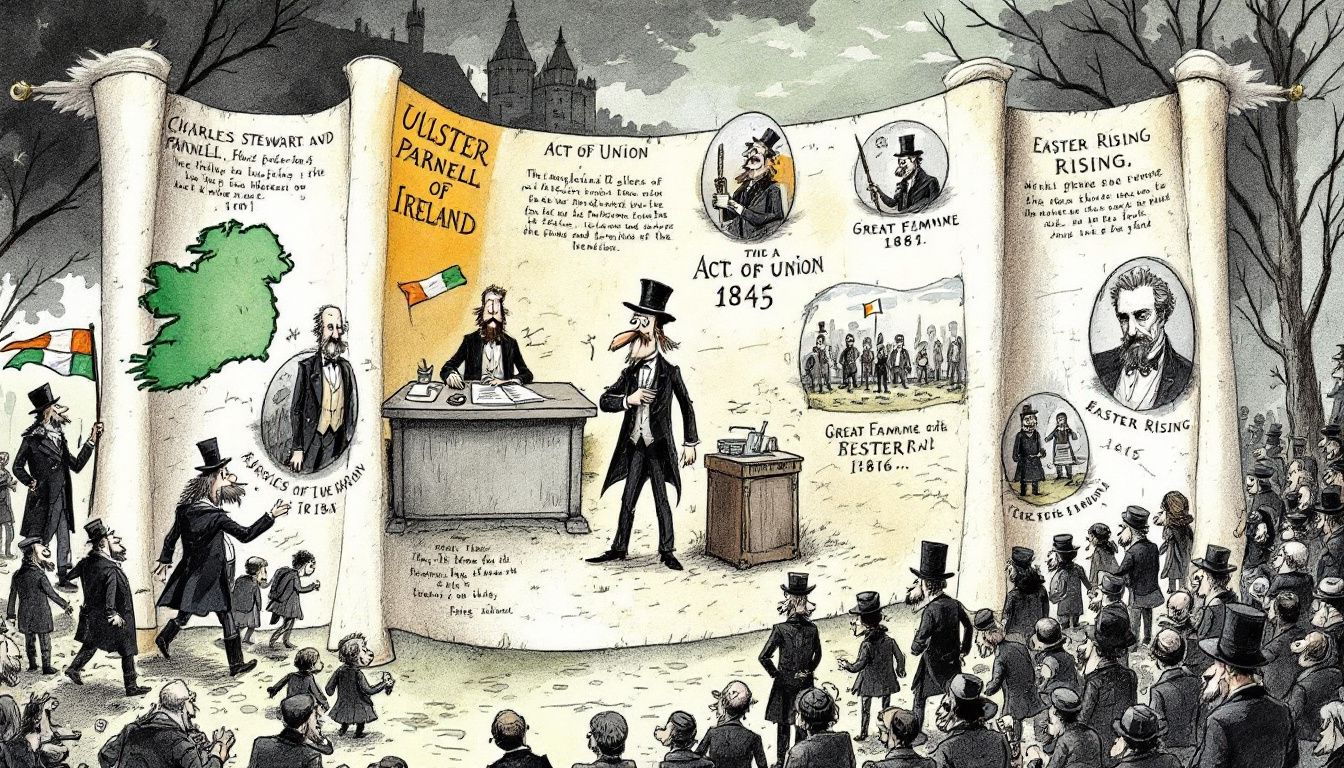
Ireland has a long history of political and social change, which set the stage for its eventual partition.
Understanding the division of Ireland involves exploring the historical events that led to its partition. Ireland was a part of the United Kingdom for 121 years, a period that profoundly shaped its political and social landscape. The partition of Ireland can be better understood by looking at the historical context and events leading to the split from the UK.
This prolonged union influenced the political dynamics and societal divisions within Ireland prior to its partition. Examining the historical context provides insights into the reasons behind Ireland’s division. Some key events played a pivotal role in this process.
The Act of Union 1800
The Acts of Union 1800 were a turning point in Irish history. These legislative acts, passed as law by both the Irish Parliament and the UK Parliament, merged the parliaments of Great Britain and Ireland in 1801, creating a single legislative body. The Irish Parliament was abolished, and legislative authority was transferred to the UK Parliament through this significant piece of law.
This union established the United Kingdom of Great Britain and Ireland on January 1, 1801. The official name of this political entity was the United Kingdom of Great Britain and Ireland, reflecting the legislative union between the Kingdom of Great Britain and the Kingdom of Ireland.
The Irish War of Independence
The Irish War of Independence was a pivotal conflict sparked by the desire for self-governance. Earlier Irish Rebellion events, such as Robert Emmet’s 1803 rebellion and the Easter Rising of 1916, were significant uprisings that contributed to the broader struggle for independence. This period was marked by significant armed conflict between Irish republicans and British forces, reminiscent of a civil war. The conflict highlighted the strong desire among Irish republicans to achieve independence from British rule.
In 1921, the Anglo-Irish Treaty partitioned Ireland, leading to the establishment of the Irish Free State and the retention of Northern Ireland within the UK. The creation of the Irish Free State marked a significant political change, providing Ireland with a level of self-governance, although Northern Ireland remained under British control.
Formation of Northern Ireland
Northern Ireland was established in 1921 as a result of the Government of Ireland Act, allowing it to remain part of the United Kingdom after the southern part gained independence. This act aimed to address the civil unrest and establish separate governance for the predominantly Protestant north and the Catholic south.
Following independence, the Irish government was established, evolving through new constitutions and legislative reforms to shape the modern Irish state and assert its sovereignty.
Ireland declared itself a republic in 1937, but it did not officially sever ties with the British Commonwealth until 1949. This move further solidified the distinct political identities of Northern Ireland and the Republic of Ireland.
The Concept of Home Rule
Home Rule was a significant movement in Irish history, centered on the idea that Ireland should have its own parliament and the authority to govern its internal affairs, while remaining part of the United Kingdom. This push for self-governance gained momentum in the late 19th century, led by influential Irish nationalists such as Charles Stewart Parnell and John Redmond. The British government responded by passing the Government of Ireland Act in 1914, which was intended to grant Home Rule to Ireland. However, the outbreak of World War I delayed its implementation, and the political landscape shifted dramatically in the years that followed. The eventual partition of the island of Ireland resulted in the creation of the Irish Free State (now the Republic of Ireland), which became an independent country, and Northern Ireland, which remained part of the United Kingdom. The struggle for Home Rule laid the groundwork for the later establishment of two separate governments on the island, shaping the modern political boundaries and identities of both the Republic of Ireland and Northern Ireland.
Common Misconceptions About Ireland’s Status
There are several common misconceptions about Ireland’s status that persist to this day. Many mistakenly believe that the entirety of Ireland is part of the UK, when in fact, only Northern Ireland holds that status. The Republic of Ireland is a completely sovereign nation and is not part of the UK.
Although there is a border between the Republic of Ireland and Northern Ireland, there is no hard physical border, and the topic of borders has been central to political debates, especially following Brexit.
Recognizing that the island of Ireland consists of two parts—the Republic of Ireland and Northern Ireland—helps dispel these myths. Two significant areas where these misconceptions often arise include terminology and political sensitivities.
The Term “Ireland”
The term ‘Ireland’ can lead to confusion because it can refer to both the island itself and the independent Republic of Ireland. This dual use often leads people to conflate the geographical entity with the sovereign state.
The Republic of Ireland’s constitution refers to the state as ‘Éire’ in Irish, which is often translated as ‘Ireland’ in English. This subtle difference in terminology underscores the importance of context when discussing Ireland.
The British Isles Controversy
The term ‘British Isles’ is another source of contention. It is commonly used to refer to the group of islands that include Great Britain, Ireland, and over 6,000 smaller islands. However, this term is politically sensitive because it implies British sovereignty over the entire region, including the Republic of Ireland.
The inclusion of the Republic of Ireland under the label ‘British Isles’ is not universally accepted and is viewed as politically sensitive. This controversy highlights the complex interplay between geography and politics in the region.
Political and Social Differences Between the Republic of Ireland and Northern Ireland
The political and social landscapes of the Republic of Ireland and Northern Ireland are markedly different. The partition of Ireland in 1920 was a response to civil unrest and aimed to establish separate governance for the predominantly Protestant north and the Catholic south.
These differences are evident in their political structures, religious demographics, and national identities. Exploring these aspects helps understand the unique characteristics of each region.
Government and Political Parties
The Republic of Ireland operates under a parliamentary constitutional republic, contrasting with Northern Ireland’s devolved government under the UK. The Republic of Ireland’s government structure is a parliamentary system, while Northern Ireland has a power-sharing arrangement established by the Good Friday Agreement.
In the Republic of Ireland, the dominant political parties are Fianna Fáil and Fine Gael. In Northern Ireland, the Democratic Unionist Party (DUP) and Sinn Féin are the two dominant political parties, representing unionist and nationalist interests respectively.
Religious Demographics
Religious demographics play a significant role in the social dynamics of both regions. Northern Ireland has a Protestant majority, while the Republic of Ireland is predominantly Catholic. These demographics influence not only social interactions but also political affiliations and tensions.
In Northern Ireland, the Protestant community constitutes the majority, whereas in the Republic of Ireland, most people identify as Catholic. This division has historical roots and continues to shape the cultural and political landscape of both regions.
Identity and Nationality
Identity and nationality in Northern Ireland and the Republic of Ireland are complex and multifaceted. In Northern Ireland, many individuals identify as Irish, while others align with British nationality, reflecting the region’s complex identity landscape.
In contrast, residents of the Republic of Ireland largely embrace an Irish identity, distinct from the British identity prevalent in Northern Ireland. This variation in national identity is influenced by historical and political contexts and continues to shape the region’s social fabric.
Cultural Differences between the Two Countries
Despite sharing the same island, the Republic of Ireland and Northern Ireland have developed distinct cultural identities. The Republic of Ireland is renowned for its rich tradition of Irish (Gaelic) language, music, and dance, with folk music sessions and céilís forming an integral part of community life. Irish is an official language in the Republic, and its influence can be seen in place names, literature, and everyday conversation. In contrast, Northern Ireland’s culture reflects a blend of Irish, Scottish, and English influences, with traditions such as the Ulster Scots language, marching bands, and unique local festivals. The two countries also differ in their culinary traditions: the Republic of Ireland is famous for its seafood, hearty stews, and iconic Guinness beer, while Northern Ireland is known for dishes like the Ulster fry, pastie suppers, and Bushmills whiskey. These cultural differences, shaped by history and heritage, contribute to the vibrant diversity found across the island of Ireland.
The Impact of Brexit on Ireland and Northern Ireland
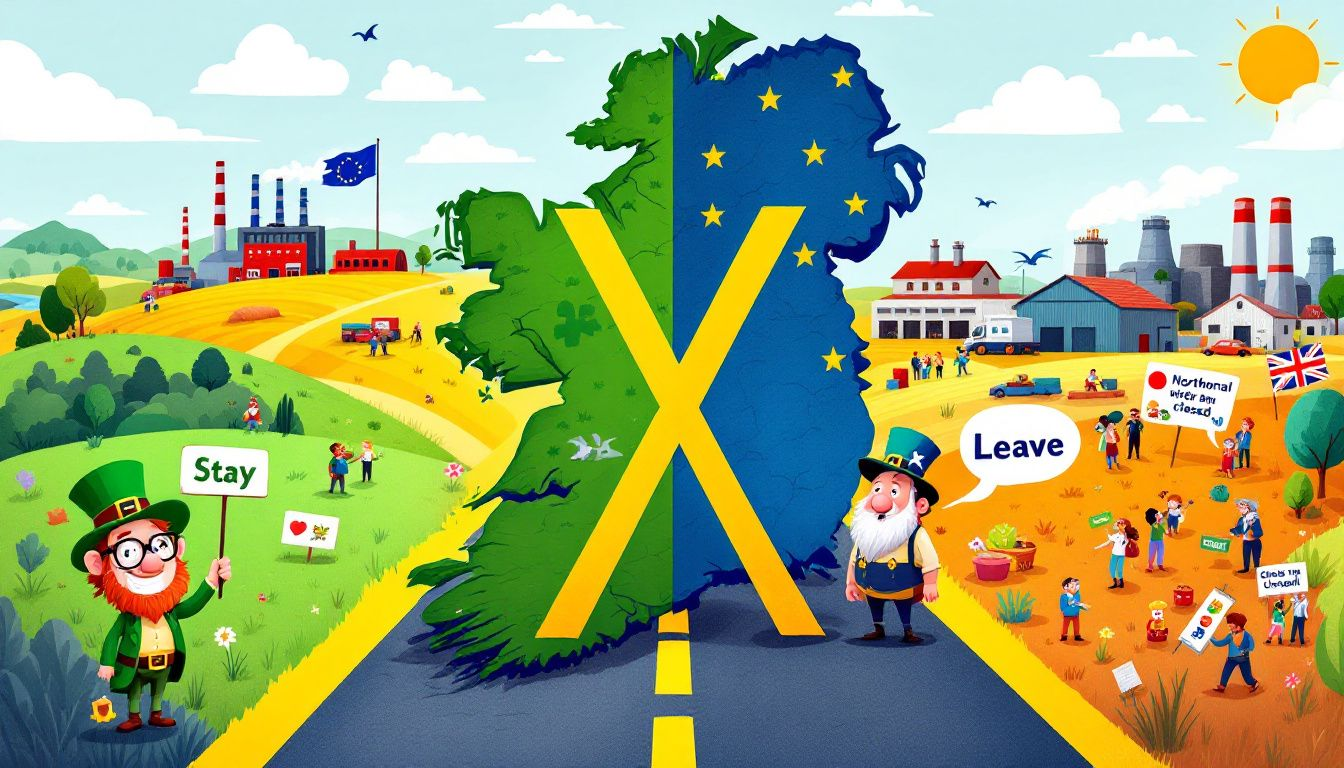
Brexit has had a profound impact on the relationship between Ireland and Northern Ireland, particularly concerning the border that separates them. The departure of the UK from the European Union has raised significant concerns about the re-establishment of a hard border, which could disrupt the peace and trade between the two regions.
Brexit has substantially altered trade relations and introduced potential tariffs and barriers between Northern Ireland and the Republic of Ireland. These issues merit closer examination.
Border Issues
The Protocol on Ireland/Northern Ireland allows Northern Ireland to stay in the UK customs territory while having access to the EU Single Market for goods. This unique arrangement has helped to avoid the establishment of a hard border between Northern Ireland and the Republic of Ireland, maintaining smooth trade relations.
However, customs checks on goods from Britain to Northern Ireland have created logistical challenges and frustrations. The Windsor Framework introduced green lanes for goods staying in Northern Ireland, minimizing checks for pre-registered traders and easing some of the burden caused by Brexit.
Trade and Economy
The dynamics of trade and customs between Northern Ireland and the Republic of Ireland have significantly changed due to Brexit. The establishment of an external EU border has complicated trade, leading to increased tariffs and barriers.
To mitigate the financial impacts of Brexit, Ireland received approximately €1 billion from the Brexit Adjustment Reserve. This funding aims to support the Irish economy and adapt to the new trade realities imposed by Brexit.
Relationships between the Two Countries
The relationship between the Republic of Ireland and Northern Ireland is shaped by a complex history and ongoing cooperation. The border separating the two countries has been a focal point for both conflict and collaboration, especially during the Troubles, a period of intense political and sectarian violence. The signing of the Good Friday Agreement in 1998 marked a turning point, establishing a devolved government in Northern Ireland and creating cross-border institutions to foster cooperation in areas such as health, education, and trade. For many years, both the Republic of Ireland and the United Kingdom (including Northern Ireland) were members of the European Union, which helped to ease border restrictions and promote economic ties. However, the UK’s withdrawal from the EU has introduced new challenges, particularly regarding trade and the movement of people and goods across the border. Despite these complexities, both countries continue to work together to maintain peace, stability, and prosperity on the island of Ireland.
Timeline of Key Events
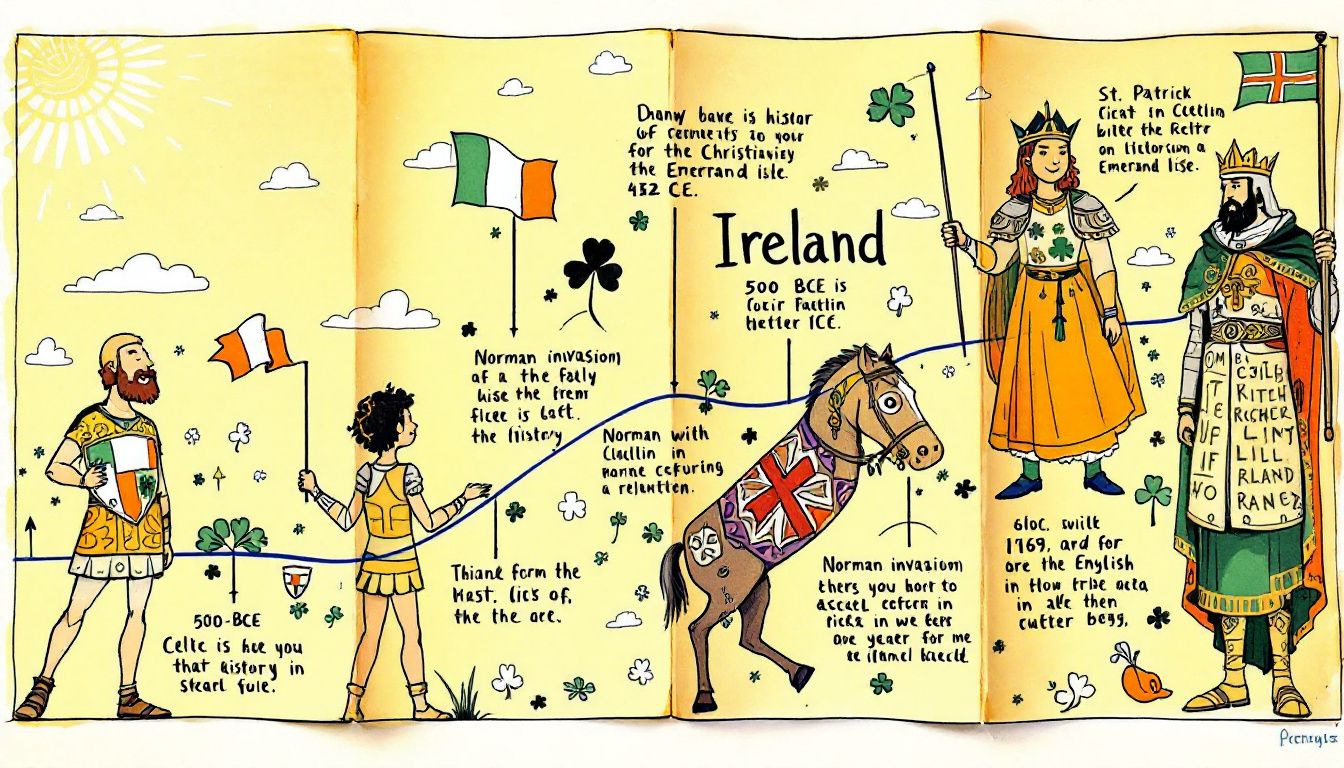
Key historical events have shaped Ireland’s current status. In the early medieval period, the High Kings of Ireland and numerous local kings played a central role in shaping Irish political and cultural history, establishing the foundations of kingship and authority across the island. France has had historical connections to Ireland, notably during the Norman invasions and through various strategic alliances. The formal union of Great Britain and Ireland occurred on January 1, 1801, creating the United Kingdom of Great Britain and Ireland. In the 19th century, Daniel O’Connell emerged as a leading figure, championing campaigns for Catholic emancipation and the repeal of the Act of Union, and is recognized as a pre-eminent Irish politician of his era.
Brexit, which commenced on January 31, 2020, raised concerns about the implications for the border between the Republic of Ireland and Northern Ireland. This event, among others, continues to influence the relationship between the two regions and their respective statuses.
Summary
In summary, the division of Ireland into the Republic of Ireland and Northern Ireland is a result of a complex history marked by conflict, political change, and evolving identities. The Republic of Ireland operates as an independent sovereign nation, while Northern Ireland remains part of the United Kingdom. Understanding the historical context, from the Act of Union to the Irish War of Independence, provides valuable insights into the reasons behind this division.
The political and social differences between the two regions are significant, influenced by distinct governmental structures, religious demographics, and national identities. Furthermore, the impact of Brexit has added a new layer of complexity to their relationship. By exploring these aspects, we gain a deeper appreciation for the unique and intertwined histories of Ireland and Northern Ireland.
Frequently Asked Questions
Is the Republic of Ireland part of the UK?
The Republic of Ireland is not part of the UK; it is a fully sovereign nation.
What is the capital of Northern Ireland?
Belfast is the capital of Northern Ireland.
When did the Irish Free State become the Republic of Ireland?
The Irish Free State became the Republic of Ireland in 1949, following its establishment on December 6, 1922.
What is the significance of the Act of Union 1800?
The Act of Union 1800 is significant as it unified the parliaments of Great Britain and Ireland, resulting in the formation of the United Kingdom of Great Britain and Ireland in 1801. This legislation had lasting political and cultural impacts on the relationship between these nations.
How has Brexit impacted the border between Ireland and Northern Ireland?
Brexit has significantly impacted the Ireland-Northern Ireland border by creating concerns over a hard border; however, the Protocol on Ireland/Northern Ireland has mitigated these issues, maintaining smooth trade relations through a unique regulatory arrangement. Thus, while challenges remain, the Protocol provides a framework to manage cross-border trade effectively.